


Buy nothing and low spend years are having a moment. You do not have to look far to see that it is being discussed a lot in many different corners of the internet and on social media. I am 100% here for it.
When I first set out to do a buy nothing year, I was genuinely scared and anxious. Not just because I was afraid I wouldn’t be able to do it, but I was concerned (terrified) how it would impact my finances. Consumption is how I made my living. I wasn’t sure if I could survive without it. It’s a story for another day (one that I’m figuring out how I want to discuss) but the truth is, it has been challenging. I’ve talked about it before, but selling stuff to people is way easier and significantly more financially lucrative.
The only way I monetize this newsletter is with paid subscriptions. No ads, no affiliate links, no encouraging you to buy stuff you don’t need. I offer sliding scale subscriptions, which means you pay what you can afford. If my subscription fees don’t work for your budget, please send me an email with what works for you (monthly or annually). No questions asked. Thank you for being here.
That said, I want to help support anyone who wants to explore this idea. Instead of looking at it as a challenge or punishment, I hope to help you see it for what I believe it has the power to do, set you free.
That may sound absurd to some, but here’s something I wrote a few months ago:
The overflowing inbox with reminders of sales or the expiring 20% off code. The “low stock” items to snag before they’re gone. The endless scroll on social media showing all the things we “need.” The time spent staring at a screen, or returning something that doesn’t work out. It’s all those stolen moments that eventually add up.
Maybe it sounds cliché to say spend time with people you love, enjoy nature, meet up with a friend, listen to music, volunteer, take up a hobby, but these are the things that will bring us joy, fulfillment, a sense of place, community and meaning. What if the things we seek to gain from buying stuff are actually free, and have been there all along?
Over the the last few weeks I’ve been reflecting on what the experience of a buy nothing year has taught me along the way. It was particularly illuminating to list out some of what I’ve discovered, but maybe most importantly to recognize that we can’t shop our way out of a burning planet, political turmoil, or human suffering. In fact, our consumption habits are making all of those things worse. The good news is we can decide the role we want to play moving forward, and that’s something to be excited about.
What I Learned Doing A Buy Nothing Year
It doesn’t have to be all or nothing
If a buy nothing year feels too restrictive for you, that’s ok. It’s better to make an effort than to throw up your hands and say “what’s the point?” You don’t have to subscribe to someone else’s method or approach for it to be meaningful.
Consumption is time consuming
All those hours searching, filtering, staring at a screen looking for stuff, it’s time we don’t get back. How often do you feel like there’s never enough time? How much of that time is spent searching for things to buy? Or consuming content telling you what to buy? What if you could use that time for something else? What would you do?
You can’t miss what you don’t know exists
It took me some time to get over my shopping FOMO but you can’t miss what you don’t know exists. I unsubscribed from almost1 every influencer newsletter that sold stuff. I unsubscribed from every single brand newsletter. I cancelled Amazon. I unfollowed every account on IG and stopped using the app almost entirely. I don’t have TikTok. I don’t use Facebook. I’m not saying you have to be that extreme, but when I eliminated the constant barrage of ads (both overt and inconspicuous) I didn’t feel like I was missing out on stuff I didn’t need in the first place.
It’s a gateway to re-discovering personal style
As an influencer, what I wore was heavily influenced by metrics. What would perform, what would sell, what would make the most money. Brand partnerships, affiliate revenue, commissions, gifting budgets, fashion industry trends, all of these things played into what I wore on a daily basis, and slowly my personal style faded into the background.
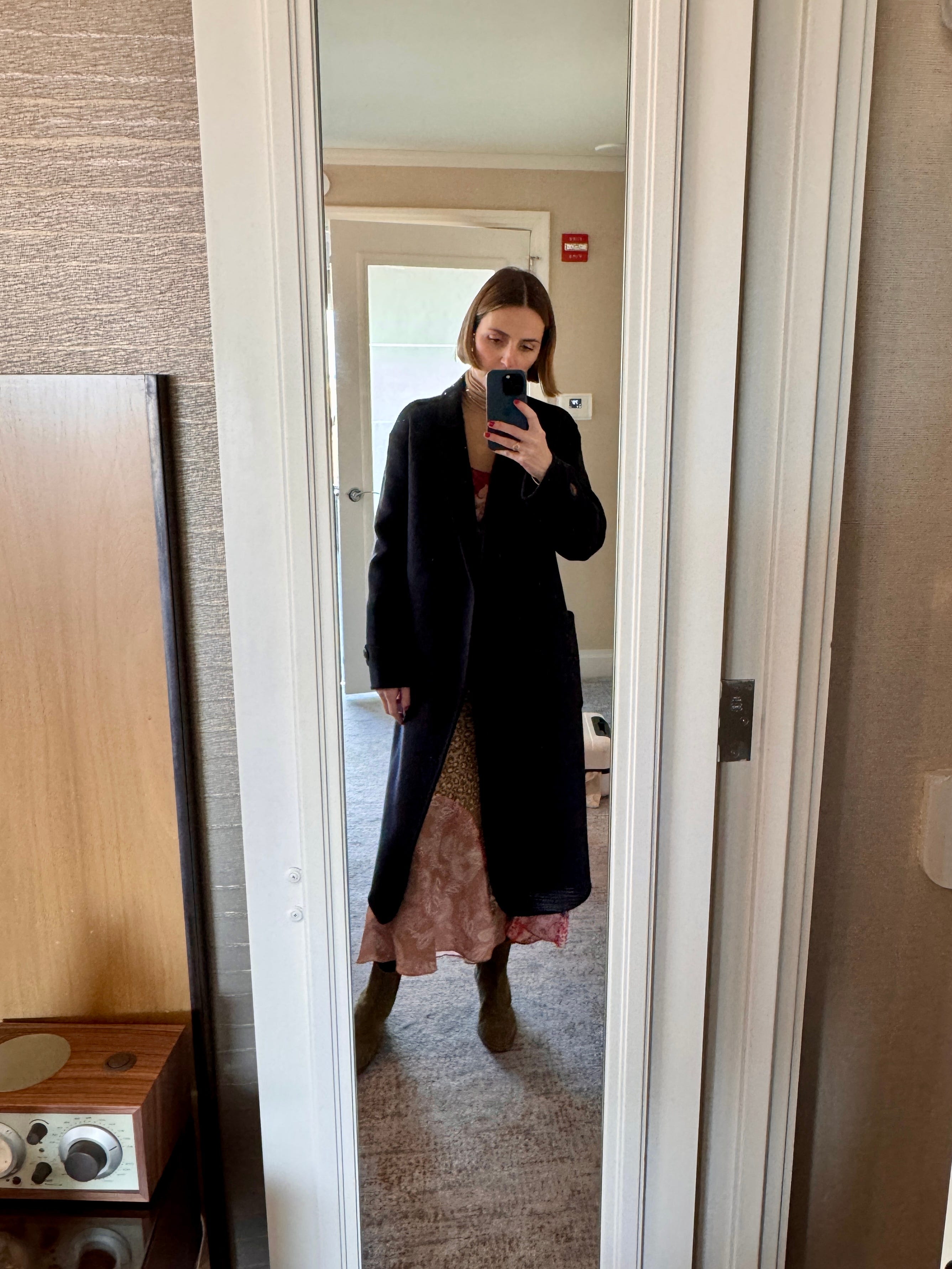
Once I was forced to work with what I had it became clear to me what was in my closet for the above reasons, and what was there because I truly loved it and felt good wearing it. It also reignited a sense of creativity and a more relaxed approach to getting dressed. Personal style became fun again.
Buying nothing forces you to pay attention to everything
Initially I thought I would keep my buy nothing approach to clothing and home goods, but in doing so, I started to pay attention to everywhere I was spending my money. I used to spend a lot of money on beauty products. But I had a medicine cabinet full of stuff, most of which was never fully used. I decided to use moisturizer and sunscreen, that’s it. It not only simplified my life but has saved me a lot of money and time that I spent doing a lengthy skincare routine.

There’s more than one way to feel good
Buying stuff makes us feel good, albeit temporarily. Shopping can be comforting. It can be a distraction from the anxiety and despair when it seems like everything around us is chaos. It has never been easier to get that quick hit of dopamine. But how long does that feeling last? How often are we reaching for that immediate satisfaction? And at what cost?
You know what else releases dopamine and makes us feel good? Being in nature, going for walks, trying something new, eating good food, having social interactions, cuddling with a pet, listening to music, reading a book…I think you get the point.
Chances are you don’t have to buy something new
Whatever you’re looking for, you can probably find it secondhand. If you consider that the average person buys anywhere from 50-60 items of clothing per year, but only wears them an average of 7-10 times before getting rid of them, that’s a lot of stuff at the thrift store (though much of it also ends up in the trash). Needless to say, the few times I did want to buy something I found it on eBay, ThredUp, Poshmark or at the thrift store.
Shopping small matters
The money you spend at small businesses is so important. They are the lifeblood of our communities. Not Amazon, Nordstrom, Shopbop, H&M, GAP or Target. It may seem like you’re saving yourself time or money by using what’s “most convenient” or the cheapest, but where we spend our money has massive implications. Consider the Walmart Effect:
In the 10 years after a Walmart Supercenter opened in a given community, the average household in that community experienced a 6 percent decline in yearly income—equivalent to about $5,000 a year in 2024 dollars—compared with households that didn’t have a Walmart open near them. Low-income, young, and less-educated workers suffered the largest losses.
One of my favorite Bluey episodes is “The Marketplace” when Bluey buys a candy apple with money from the tooth fairy, but regrets her choice because she wanted to buy a song from the musician. Her friend Indy assures her that “what goes around comes around.” As the episode continues we see the $5 make its way around the entire market, where it eventually ends up back at Indy's mom's stand. Indy's mom gives her the money to request a song from the musician.
It’s such a simple and beautiful way to see how supporting small and local businesses has a direct impact on your community. In addition to the economic benefits, shopping locally means less of an environmental impact, from reducing carbon emissions for things like shipping, to supporting products and goods sourced locally.
What we buy matters, and so does how we buy it. When it comes to the implications of our consumption, what goes around comes around. How much longer will we ignore the consequences? How much longer will we have that choice?
The only way I monetize this newsletter is with paid subscriptions. No ads, no affiliate links, no encouraging you to buy stuff you don’t need. I offer sliding scale subscriptions, which means you pay what you can afford. If my subscription fees don’t work for your budget, please send me an email with what works for you (monthly or annually). No questions asked. Thank you for being here.
There’s a few newsletters I subscribe to that occasionally share things but I know there’s a lot of thought and intention behind it. And it’s almost always secondhand items.
This isn't really a comment on your article - but a thought I had while packing up my Christmas stuff and putting away gifts, etc. An article or rather, crowd sourced article/list, of ideas for handmade gifts that people can ACTUALLY use. Depending on your resources, skills, interest and time there are endless possibilities. I think an article sharing these ideas for your particular readership would be lovely, and I bet many of us could contribute.
Secondly, cheers to a year of buying less. I pulled the trigger and unsubscribed for almost all the retailers I frequent, and trying very hard to cut the final cord on my last 2 Amazon subscribe & save items, special food one of my dogs requires and 100% bamboo TP. (I know I can find the TP, however the other adult in my house is a lot pickier than me...but I'm working on him). If you ask why bamboo? I encourage you to research the difference between traditional wood pulp TP vs bamboo. The dog food is tricky because its very expensive. I've reached out to a feed store cooperative near me and am in negotiations to have them order it in bulk for me at similar price. They haven't said yes yet, but I have my fingers crossed.
This newletter article really resonates with me. I feel such a relief now that the holidays are over, and I'm not buying items, returning items, unboxing items, scrolling the internet in search of items to buy, etc. I have more time in my day to do what I love, and I would like to keep that up. I love the idea of stopping Amazon but I have some questions that might be silly. Where do you buys essentials like toothpaste, toothbrushes, toilet paper, paper towels, dishwashing soap, etc? I feel like the places I'd turn to buy those items are big box stores like Target, or Whole Foods, which in the end is the same as Amazon. If you or others can chime in on this I'd so appreciate it. Thanks!